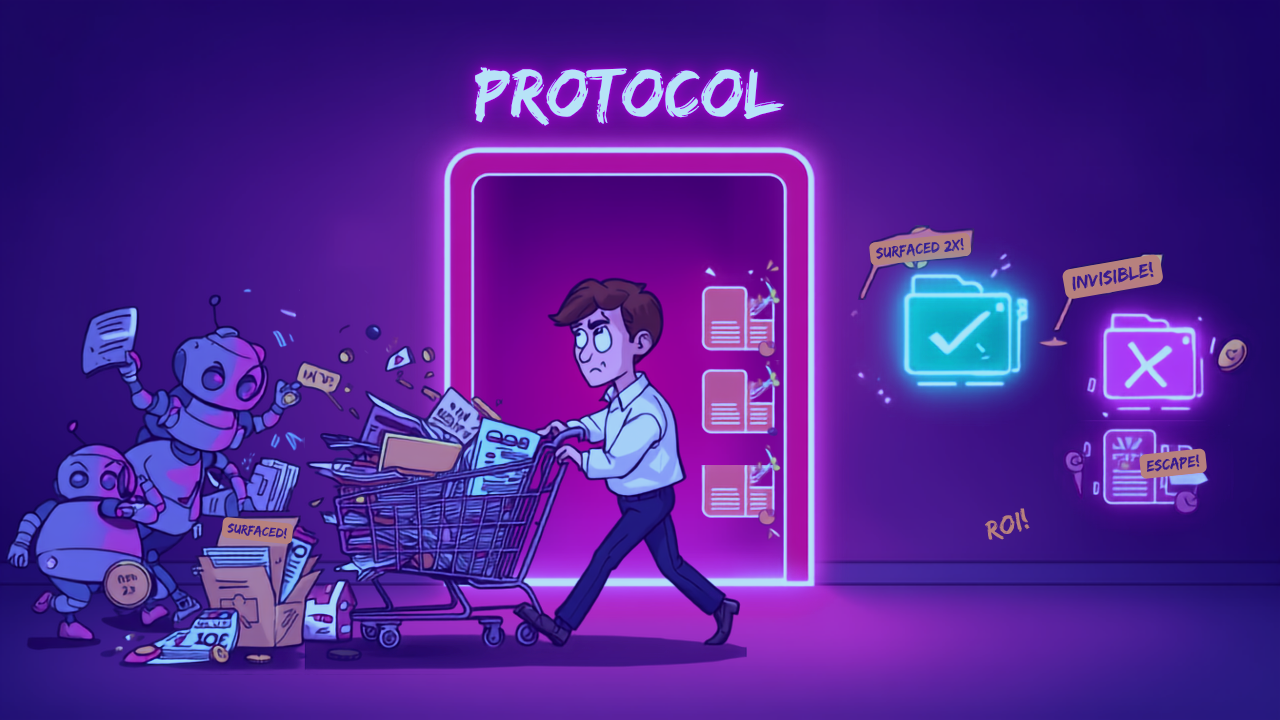
Your team spends 18 hours onboarding one supplier and 2 hours on another. Same product category, similar catalog size, identical internal process. The 16-hour difference? Supplier data quality. One sends clean CSVs with complete specifications. The other sends scanned PDFs with missing fields and inconsistent naming. The first costs €60 in labor. The second costs €540.
Most companies track supplier pricing, delivery times, and product quality religiously. Almost none audit data readiness systematically. According to composite data from IDC research and LemonMind client surveys, 73% of companies never measure supplier data quality before onboarding. They discover the problem mid-project when manual cleanup explodes the timeline.
Industry data from Salsify and internal LemonMind audits shows poor supplier data adds 40-60% overhead to onboarding time. That is the hidden cost nobody budgets for.
A simple 15-minute pre-onboarding audit checks three dimensions: Completeness (are required fields present?), Consistency (do naming conventions align?), and Structure (can machines read the data?). Our analysis of supplier onboarding patterns across 70+ PIM implementations shows chaotic suppliers cost 8-10 times more to onboard than organized suppliers. One industrial manufacturer received data from eight suppliers in the same category. The best supplier took 2 hours to onboard 120 products. The worst required 18 hours for the same workload. That 16-hour difference equals €480 per supplier at standard European labor rates. Scale that across 50 suppliers per year and you are looking at €24,000 in hidden costs.
The Hidden Cost Nobody Measures
A mid-market industrial adhesives manufacturer onboarded eight new suppliers across Europe and Asia. Standard procurement had vetted pricing, delivery terms, and product certifications. Everything looked good on paper. Then the data arrived.
Supplier A, a German manufacturer, delivered a UTF-8 encoded CSV file with clear column headers, consistent units (all millimeters), complete product specifications (14 of 15 GPSR-required fields), and properly named image files. The junior data manager imported the file, spot-checked three products, and had 120 SKUs production-ready in 2 hours. No back-and-forth. No clarifications. No cleanup.
Supplier B, a Chinese manufacturer with competitive pricing and excellent product quality, sent a 47-page scanned PDF. Tables rendered as images, not selectable text. Product specifications in a mix of English and Mandarin. Units inconsistent (millimeters on page 3, centimeters on page 12, inches on page 38). Six of 15 GPSR-required fields were missing entirely. The senior data manager spent 18 hours manually transcribing data, sent four rounds of clarification emails, waited three weeks for responses, and finally delivered 120 products with 40% of technical specifications still incomplete.
The 16-hour difference equals €480 at €30 per hour fully-loaded labor cost. For a company onboarding 50 suppliers annually, that pattern compounds to €24,000 in unnecessary labor if half the suppliers deliver chaotic data.
Most companies never connect these dots. They track supplier performance on delivery speed, defect rates, and invoice accuracy. But data readiness? That is “just part of the onboarding process.” It is not measured, not managed, and definitely not part of procurement criteria. When manual product data entry costs €14,000 per 1,000 products on average, low-quality supplier data multiplies that cost by requiring extensive cleanup before entry can even begin.
The 15-Minute Audit: 3 Things to Check
Check three dimensions before signing any supplier contract.
1. Completeness: Are Required Fields Present?
Start with the mandatory fields. For GPSR compliance, 15 fields are required starting June 2026: product name, SKU, description (minimum 50 characters), category, dimensions, weight, units, images, price, manufacturer name and address, responsible person in EU, safety warnings, material composition, and country of origin. Add industry-specific requirements: technical specifications for electronics, fabric composition for apparel, certifications for regulated products.
Request a sample data file from potential suppliers before signing contracts. Count how many required fields are present. If a supplier sends data with 14 of 15 mandatory fields, that is 93% complete (very good). If only 9 of 15 are present, that is 60% complete (expect significant back-and-forth to fill gaps).
Missing fields are blockers. You cannot publish a product without mandatory data, so incomplete supplier files force expensive clarification cycles or manual research. The German adhesives supplier provided 14 of 15 fields. The Chinese supplier provided 9 of 15. That difference explained half of the 16-hour gap.
Red flags: Supplier refuses to share sample data before contract signing. Supplier provides samples with more than 20% of required fields missing.
2. Consistency: Do Formats and Naming Align?
Check for common inconsistency patterns: units (millimeters versus centimeters versus inches mixed in the same file), color naming (red versus Red versus RED versus rouge), date formats (DD/MM/YYYY versus MM/DD/YYYY), decimal separators (period versus comma), boolean values (Yes/No versus 1/0 versus True/False), currency (EUR versus € versus euro).
Our analysis of Excel-based supplier data across LemonMind implementations shows 64% contain naming inconsistencies. Fixing consistency issues is labor-intensive. If a supplier has 200 products with three different naming conventions for “red” (red/Red/RED), that means finding and correcting 600+ individual cells.
Red flags: Sample file shows 5+ distinct inconsistency patterns. Supplier cannot explain why units or naming vary.
3. Structure: Can Machines Read the Data?
Assess the base file format. Best case: clean CSV or JSON files with proper encoding (UTF-8) and clear header rows. Good case: Excel files without merged cells, without formulas in data cells, and with clear column headers. Problematic case: PDFs with selectable text in tables. Worst case: scanned images or handwritten notes.
Structure determines automation potential. A clean CSV means you can write import scripts and handle 1,000 products in an hour. A PDF with selectable text means manual transcription but at least you can copy-paste. A scanned PDF means manual transcription character-by-character. Internal LemonMind benchmarking data shows 82% of PDF-based suppliers send unstructured data that requires full manual transcription.
Red flags: Supplier sends only PDFs. Sample file has merged cells throughout. Data mixed with marketing content.
How to Run the Audit (6 Steps, 15 Minutes)
Step 1: Define Your Requirements (Before Requesting Data)
List your mandatory fields. Start with GPSR (15 fields), add industry-specific requirements, add internal needs. Share this list with potential suppliers upfront: “We need these fields to onboard your products. Can you provide them?”
Step 2: Request Sample Data File
Ask for a representative sample covering 20-50 products. Not a cherry-picked demo. A real export from their system. If they refuse or delay, that is a red flag. Organized suppliers can export sample data in minutes.
Step 3: Audit Completeness (5 minutes)
Open the sample file. Count required fields. Mark which ones are present and which are missing. If more than 20% are missing, ask: “Can you add these fields?”
Step 4: Audit Consistency (5 minutes)
Scan for common patterns: units, colors, dates, decimals, booleans, categories. Count how many distinct inconsistency types you see. If you spot 5+ patterns in a 20-product sample, expect 50+ in the full catalog.
Step 5: Audit Structure (5 minutes)
Check file format. Check for merged cells, formulas, encoding issues, missing headers. If the sample is a scanned PDF or has severe structural problems, ask: “Can you export in CSV or clean Excel format instead?”
Step 6: Document and Decide
Write down what you found: Completeness (X of Y fields present), Consistency (Z issue types), Structure (format + problems). Share findings with procurement and data teams. Decide: proceed as-is (if data is clean), negotiate improvements (if supplier is willing), budget extra cleanup time (if supplier is essential but unwilling), or reject (if alternatives exist with better data quality).
What Companies Gain When They Audit Suppliers
Fashion Wholesaler Supplier Improvement Program: A seasonal fashion wholesaler managing 12 suppliers discovered their onboarding process was chaotic. Some suppliers took 3 hours, others took 9 hours, with no clear explanation. They ran the 15-minute audit on all 12 suppliers and found the average data quality was poor: 50% of required fields missing from some suppliers, 10+ consistency issues common, PDFs instead of structured files frequent.
They created a “Supplier Data Guidelines” PDF defining required fields, acceptable formats, and consistency standards, then shared it with all suppliers. They added an incentive: suppliers who met the guidelines would receive priority consideration in the next season orders. Six months later, average onboarding time dropped from 6 hours per supplier to 3.5 hours, and annual labor savings totaled €3,600 (150 hours at €24/hour blended rate).
The key insight: most suppliers can improve when given clear criteria. They are not deliberately sending bad data. They simply do not know what “good” looks like.
Electronics Distributor Supplier Rejection: An electronics distributor evaluating 12 potential suppliers for a new product line ran data quality audits before signing contracts. Three suppliers had severe problems: scanned catalog PDFs, missing 50%+ of required fields, no machine-readable structure. The distributor rejected all three despite competitive pricing. By avoiding those suppliers, they estimated saving €12,000 in cleanup costs.
The breakthrough: data quality moved from “we will deal with it later” to a procurement gate criterion alongside price and delivery time.
What to Do With Low-Quality Suppliers
You have four options depending on data quality and your business constraints.
Option 1: Negotiate Improvements. When a supplier has poor data quality but the relationship is strategically valuable (exclusive products, favorable pricing, reliable delivery), request specific improvements. Share your audit findings and ask for adjustments. “Can you send Excel files instead of PDFs?” “Can you standardize on millimeters for all dimensions?” Many suppliers are willing to adjust data formats if it means keeping the business relationship.
Option 2: Budget for Cleanup. Some suppliers deliver products you cannot source elsewhere (patented technology, geographic monopoly, unique designs). If their data quality is poor and they are unwilling to improve, build cleanup costs into your procurement model. Budget 2-3 times normal onboarding time and price that labor into your total cost of ownership calculations. Make the trade-off explicit and budgeted rather than discovering the cost mid-project.
Option 3: Reject Low-Quality Suppliers. If you are evaluating multiple suppliers and data quality varies widely, use it as a procurement criterion. Set a minimum threshold (must provide 80%+ of required fields in CSV or Excel format) the same way you would set delivery time or quality standards. This option requires discipline because low-quality suppliers often have attractive pricing (they are not investing in data infrastructure). But PIM ROI calculations that ignore supplier data quality systematically underestimate onboarding costs.
Option 4: Automate With AI. When low-quality suppliers are unavoidable and unwilling to improve (monopoly suppliers, critical products with no alternatives), AI-powered extraction becomes economically viable. openProd.io AI-first onboarding handles scanned PDFs, merged Excel cells, and inconsistent naming patterns. The cost comparison: manual transcription for chaotic suppliers runs €14,000 per 1,000 products, while AI extraction costs approximately €2.50 per 1,000 products in API fees. The trade-off: AI extraction produces 70-95% confidence scores per field, so you still need human-in-the-loop review for low-confidence data. But reviewing flagged fields takes 10-20% of the time required for full manual entry.
The Question Your Procurement Team Should Ask
Traditional procurement evaluates suppliers on price, delivery time, quality, and payment terms. Those are necessary criteria. They are also insufficient. A supplier who delivers on time, at the right price, with perfect product quality can still cost you tens of thousands in hidden onboarding labor if their data is chaotic.
Research from IDC shows 67% of companies cite supplier data as the top bottleneck in product onboarding. Yet fewer than 30% of procurement teams include data quality in RFP criteria or supplier scorecards.
The missing question: “Can you provide a sample data file covering 20-50 products in CSV or Excel format before we sign the contract?” Not “do you have good data quality” (everyone says yes). Not “can you send structured data” (too vague). The specific request: a real sample export from their system, representative of what you will receive at scale.
Suppliers who can provide that sample within 24 hours signal that they understand data as a deliverable, not an afterthought. Suppliers who cannot or who deflect are signaling that data quality is not managed on their end, which means you will absorb the cleanup cost on your end.
In five years, supplier data quality audits will be as standard as on-time delivery KPIs. Early adopters gain a structural advantage: they negotiate better terms with suppliers by making data quality expectations explicit, they allocate internal resources more efficiently, and they avoid hidden costs that competitors are still discovering mid-project. The electronics distributor who rejected three chaotic suppliers saved €12,000 because they audited data quality before signing contracts. Their competitors signed first, audited never, and absorbed the cleanup cost as “normal” onboarding overhead.
Add supplier data quality audits to your RFP process. Share audit criteria with suppliers upfront. Track data quality over time to see which suppliers improve and which stagnate. Make data quality a procurement gate criterion. That is the shift from reactive firefighting (“this supplier data is a mess”) to proactive quality management (“this supplier has incomplete data, which means we budget 8 hours per 100 products or we negotiate improvements before we scale the relationship”). The companies making that shift now are building the operational foundations that will define their cost structure and speed advantages for the next decade.
Sources & Further Reading
Industry Analysis:
- Gartner. “Master Data Management Market Guide.” 2024.
(Data quality cost benchmarks: $12.9M annually per organization) - IDC. “Supplier Data Management Best Practices.” 2023.
(67% cite supplier data as top onboarding bottleneck)
Vendor/Comparison:
- Akeneo. “The Hidden Cost of Poor Product Data.” 2024.
https://www.akeneo.com/blog/cost-poor-product-data/ - Salsify. “Supplier Onboarding Playbook.” 2023.
https://www.salsify.com/resources/playbooks/supplier-onboarding
LemonMind Implementation Data:
- Mrozik, Olgierd. “The €14K Question: True Cost of Manual Product Data Entry.” openProd.io Blog, February 2026.
https://openprod.io/blog/14k-question-true-cost-manual-product-data-entry - Mrozik, Olgierd. “The Real ROI of a PIM: How to Build the Business Case for Enterprise PIM.” openProd.io Blog, February 2026.
https://openprod.io/blog/pim-roi-enterprise - LemonMind. “Supplier Data Audit Patterns (2020-2026).” Internal analysis of 70+ PIM implementations.
Supplier file format analysis: 82% of PDF suppliers send unstructured data, 64% of Excel suppliers have naming inconsistencies. - LemonMind. “Industrial Adhesives Manufacturer Case Study.” Internal briefing, 2025. Anonymized.
German supplier versus Chinese supplier, 2h vs 18h onboarding time. - LemonMind. “Fashion Wholesaler Supplier Improvement Program.” Internal case study, 2024-2025. Anonymized.
Onboarding time reduction from 6h to 3.5h per supplier, €3,600 annual savings.
All case examples anonymized per client confidentiality agreements. Cost and time estimates based on LemonMind project audits and time-tracking data from enterprise PIM implementations.